Search This Blog

Friday, June 22, 2012

Celebrate National Pollinator Week!


This week is National Pollinator Week! It was initiated and is managed by the Pollinator Partnership. The Pollinator Partnership is a great resource for all things pollinators and you can get more information at their website:
 Pollinator Partnership Website

The Xerces Society also is a great resource for pollinator information:
Xerces Society CA Pollinator Resource Center Webpage

To celebrate we have compiled several of our favorite pollinator photos that were taken around our Farms by the owner, John Anderson.  Enjoy these and get out this weekend and look around for pollinators in your area.   

A bumblebee on phacelia, Phacelia californica
A swallowtail butterfly on coyote mint, Monardella villosa
A bumblebee on common madia, Madia elegans


A swallowtail butterfly on pink flowering currant, Ribes sanguineum var. glutinosum

A honeybee getting ready to land on common madia, Madia elegans

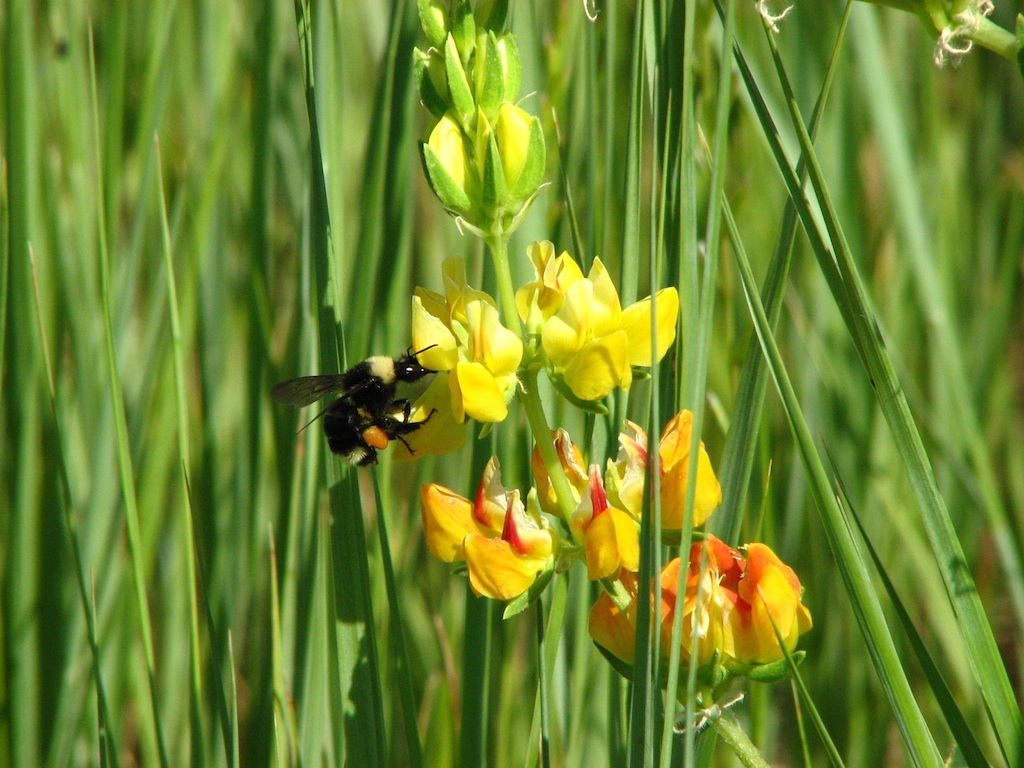
A bumblebee on bull clover, Trifolium fucatum

A skipper butterfly on goldenrod,  Euthamia occidentalis

A honeybee heading for vinegarweed, Trichostema lanceolatum

A Buckeye butterfly on button-willow, Cephalanthus occidentalis

Some honeybees and a butterfly enjoying coyote brush, Baccharis pilularis

A bumble bee on golden lupine, Lupinus densiflorus

A bee on Bolander's sunflower, Helianthus bolanderi

A bee on tomcat clover, Trifolium willdenovii

Two bees hanging out on cliff aster, Malacothrix saxatilis

A bee on California aster, Symphyotrichum chilense (Aster chilensis)
A hummingbird on evening primorse, Oenothera elata ssp. hirsutissima

A hummingbird enjoying California fuchsia, Epilobium canum

A monarch butterfly on narrow leaf milkweed, Asclepias fascicularis

A Duskywing butterfly on Bolander's sunflower, Helianthus bolanderi

A bee (maybe a wasp, not sure) honing in on an evening primrose, Oenothera elata ssp. hirsutissima bloom

An Anna's hummingbird  (Calypte anna) in it's nest 

A butterfly on Agastache urticifolia, horse mint

A pollinator on caterpillar phacelia, Phacelia cicutaria

A wasp on narrow leaf milkweed, Asclepias fascicularis


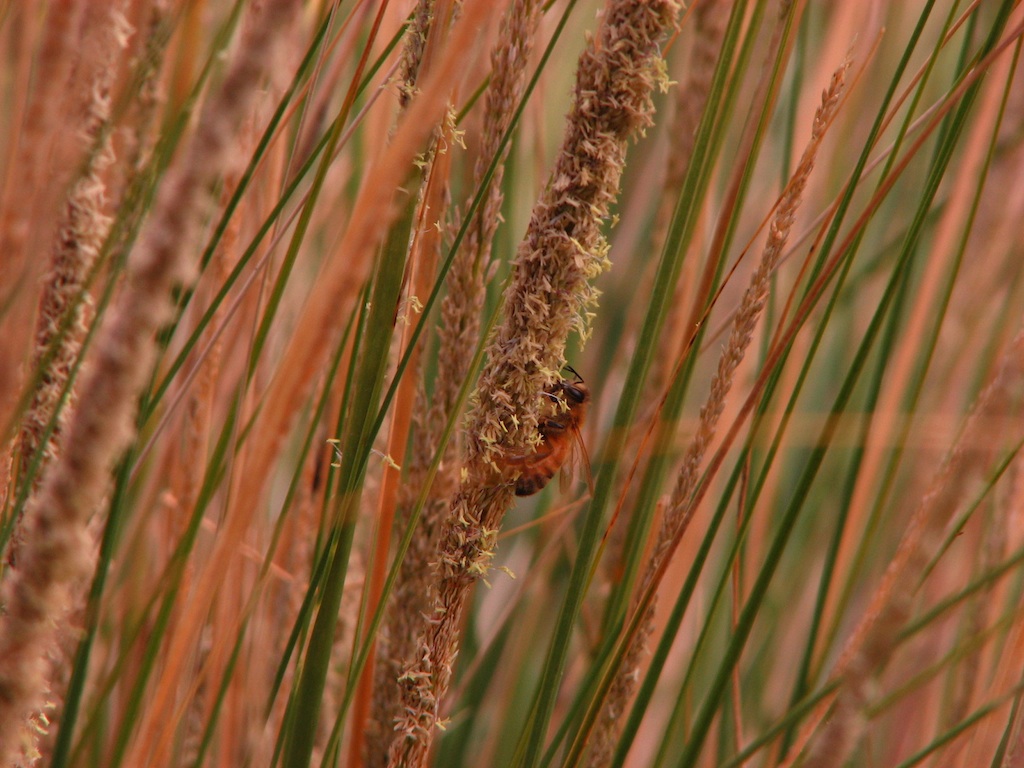
A bumblebee on deergrass, Muhlenbergia rigens
A monarch and two bees on showy milkweed, Asclepias speciosa
**This was edited on July 2nd to correct for the miss identification of butterflies as moths as pointed out by a reader. Please let us know if you see anything else, we know the plants but are learning our pollinators!


Friday, May 18, 2012

Carrizo Field Trip Part 2: Vernal Pool

Written by Emily Allen

In the afternoon of our field trip to the Carrizo Plains National Monument we were able to visit the Carrizo vernal pool region, at the southern end of the valley. A few pools had water in them from recent rains.
View of the vernal pools.
There was an amazing amount of wildlife around and in the pools including a large spider, evidence of ground-nesting bees, and a centipede. There were also large numbers of fairy shrimp in the shallow edges of the pools.

A centipede
A spider in a dry area  around the pools


A close up of a nest tunnel. 
A collection of nest tunnels made by ground-nesting bee.
There was a diverse collection of plants in and around the vernal pools as well:
Lasthenia ssp. , goldfields
Plagiobothrys ssp., popcorn flower
Distichlis spicata, saltgrass
Frankenia salina, alkali heath


Friday, April 27, 2012

Carrizo Plain NM Field Trip: Part 1

Written by Emily Allen
At the end of March John and I joined in on a field trip to the Carrizo Plain National Monument, located in San Luis Obispo County. We were fortunate enough to have Larry Saslaw and Denis Kearns, botanists with the BLM, as our guides. They are a wealth of knowledge about the flora and fauna of the Carrizo. We started our trip at the Guy L. Goodwin Education Center.  There is a lot of information about what you can find in the area and a great display area with a cross section of a Giant Kangaroo tunnel. Around the center is a labeled garden with some of the species of grass, flower, shrub and tree species found in the monument.

Our first stop was a site that was planted with Stipa (Nassella) cernua, nodding needlegrass and Poa secunda, one sided blue grass. Hedgerow Farms has been growing Poa secunda and Stipa cernua that was collected in the Carrizo so the seed can be used in areas that are disturbed or being restored throughout the Carrizo. This site was seeded in 2006 and there is an established stand of Stipa cernua that has started to fill with new seedlings. There is a lot of weed pressure from red brome, but the Stipa seem to be doing well. There were only a few Poa at this site. 

An area successfully seeded with Stipa (Nassella) cernua in 2006.
Our second stop of the day was to a cinder cone that we hiked to the top of. From the top you can see a large amount of giant kangaroo rat (k-rat) precincts. A k-rat will generally keep his burrow and the area around it (all together called a precinct) cleared and groomed. Each precinct houses one k-rat.

View of the giant kangaroo rat precincts from the top of the cinder cone.
A k-rat will harvest seeds from his precinct and dry and store them in his burrow. The giant kangaroo rat is a state and federally listed endangered species and is a keystone species within the Carrizo NM.
A trail of seed at a burrow entrance.
A Giant Kangaroo Rat burrow entrance.
We also got to visit a site where Poa secunda, one sided blue grass, is the dominate perennial grass (below).
A view of the valley and Poa secunda, one sided blue grass.
 Below is a site near a parking lot that was seeded in early 2011. The Stipa cernua is doing really well.

Stipa (Nassella) cernua that was seeded in early 2011.
Usually this time of year is a great time to see wildflowers, but since it has been a dry spring so there weren't very many to see. One of the wildflowers that we did see throughout the valley is Phacelia ciliata, valley phacelia (pictured below). There were patches of it along the road as we entered the norther part of the valley and there were pockets of purple throughout the valley.

Phacelia ciliata, valley phacelia.
Stay tuned for part 2: the Vernal pools.

Thursday, March 22, 2012

New Year, New Office!

As you can tell from our long absence on the blog fall and winter are our busiest times of the year. A lot of projects are seeded in the fall, which is the ideal time of year if it actually rains like it should. We have not received anywhere near normal rain this season. We were irrigating fields in January.....January!!! We have had to replant several production fields where the seeds either germinated with the first rain of the season and then withered with no substantial rains or the seeds just never germinated. Hopefully we will see some steady precipitation in the forecast soon. The farm got around 1.5 inches of rain with last weeks system, so things are looking up.

The 70 degree weather that we were seeing a few weeks ago was good for construction, which helped with the installation of our new office. The new office is twice the size of our current office, offering some much needed space.

Here are some photos of the construction process:
The new office with the bones of the patio


Finished office with the finished deck, handicap parking, ramp, and paved sidewalk to the cleaning barn


The beautiful shaded patio

A separate room!

There are two rooms in the office, a large one that will have all of the desks in it and a smaller side  room that will be used to house the noisy printer/fax and will also be used for meetings. We are hoping to move into the office soon, just need to finalize permits and install larger windows. We should be in by April!

Monday, August 22, 2011

Native Grass Straw

Harvest is mostly finished on the farm and now we are focused on cleaning the seed and getting ready for fall orders.  We also have most of the straw for the year baled up and ready to be used on projects. 
Leymus triticoides, creeping wildrye, straw freshly baled

Straw stack mover collecting the bales from the field

Straw stack mover dropping off another stack of straw
The majority of the straw we have now is really nice Leymus triticoides straw. We also have a limited amount of Hordeum brachyantherum and Nassella pulchra straw. We sell the straw by the bale as well as the ton, depending on how much you need. Our straw is certified noxious weed free.

The straw bale sizes are variable but they are roughly 3.5' x 2' x 1.25'. The Leymus triticoides and Nassella pulchra straw bales weigh around 80 lbs each (~ 25 bales/ton) while the the Hordeum brachyantherum straw bales weigh around 90 lbs each (~23 bales/ton). 

Native grass straw can be used for erosion control, mulch, and as seed cover. Most straw contains viable seed, but we do not recommend using straw as the only seed source. 

Straw is used to cover a hydroseeding trial on the farm (more on the trial to come!)

Friday, August 12, 2011

Snakes on a Farm!

This spring and summer there have been numerous snake sightings in and around Hedgerow Farms. There are several species of snakes that have been found here, but more of the snakes being spotted this year are rattlesnakes. Below are some pictures of a variety of snakes found on the farm through the years:

Rattlesnake found on the farm in 2003


Gopher snake found on the farm in 2006

A king snake found on the farm in August of 2010

A rattlesnake found in May of this year digesting a large rat!
(It was roadkill and John opened it up to see what was inside)

Another rattlesnake found in the seed storage barn in June.
In that same week 4 other snakes were spotted, 3 being rattlesnakes.
With large numbers of snakes comes a high probability of bites. Within  a week there were two dogs bit by rattlesnakes on the farm. One snake bite occurred in some grass along a canal right before the fourth of July weekend and the other happened in the outdoor dog kennel right in the yard (no one saw the second snake, we just saw that Rottie, the farm dog, had a very swollen face).  The two days after the second dog was bit two additional rattlesnakes were found.

Rottie, thefarm dog, appeared to have been bit on the lip while in her kennel. She received one round of antivenom and recovered quickly


Darin, a black lab, was bit on the inside of his forearm. He received two doses of antivenom and after two weeks of recovery is back to normal.


We are all being diligent when it comes to being aware of snakes while walking around. There is an abundance of them this year!

Wednesday, August 3, 2011

Shop Fire

NOTE: WE ARE OPEN FOR BUSINESS AS USUAL! BUY SEED!

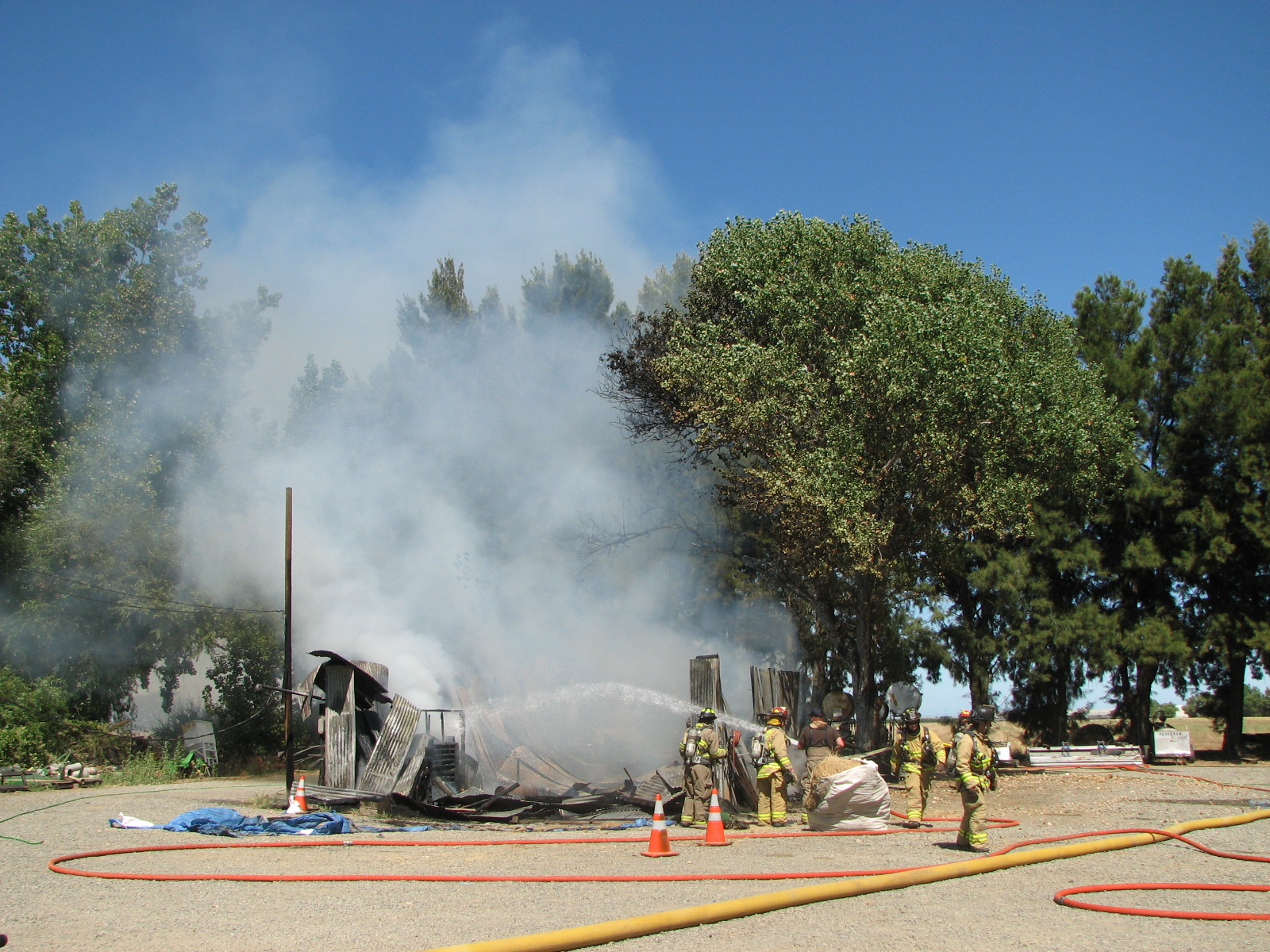
On Monday, July 18th, Hedgerow Farms lost its machine shop to a fire (this is the mechanic shop that contained tools for fixing farm machinery, NOT the seed cleaning shop or the storage barn! Those are fine). We still aren't certain how it started, but the whole building burned to the ground in about an hour.

It happened around 3pm and from the office we noticed some suspicious looking smoke (it actually looked like a dust cloud at first) coming through the front door.
Within a minute there were visible flames.

It was a three alarm fire with Madison, Yocha Dehe and Esparto fire trucks and additional crew from Winters. We also had several water trucks assist, one being from Willow Oak Fire.
We really appreciate all these folks did to keep the fire contained and under control!

 Here is a sequence of photos during the fire:


The roof collapsing

The fire created a large smoke cloud

There were several water trucks that brought additional, necessary, water.

After the fire had burned, there was a pile of scrap metal

 The frame of the Honda that was in the shop